After reading tonight’s forecast discussion for Hurricane Florence, I noticed something about this that feels very familiar to another hurricane I experienced before: Hurricane Ike.
For those not familiar, Hurricane Ike struck the coast of Texas and went inland right through Houston in September 2008. At the time I was in high school and had yet to study meteorology, but I was familiar enough with hurricanes to have a general sense of the category system, the Saffir-Simpson Hurricane Scale as it was known then. As Ike moved into the Gulf of Mexico it weakened substantially, only managing to get back to Category 2 from its previous Category 4 strength. When my aunt started to freak about the approaching storm, I remember very distinctly saying this:
“Why are you freaking out? It’s only a Category 2.”
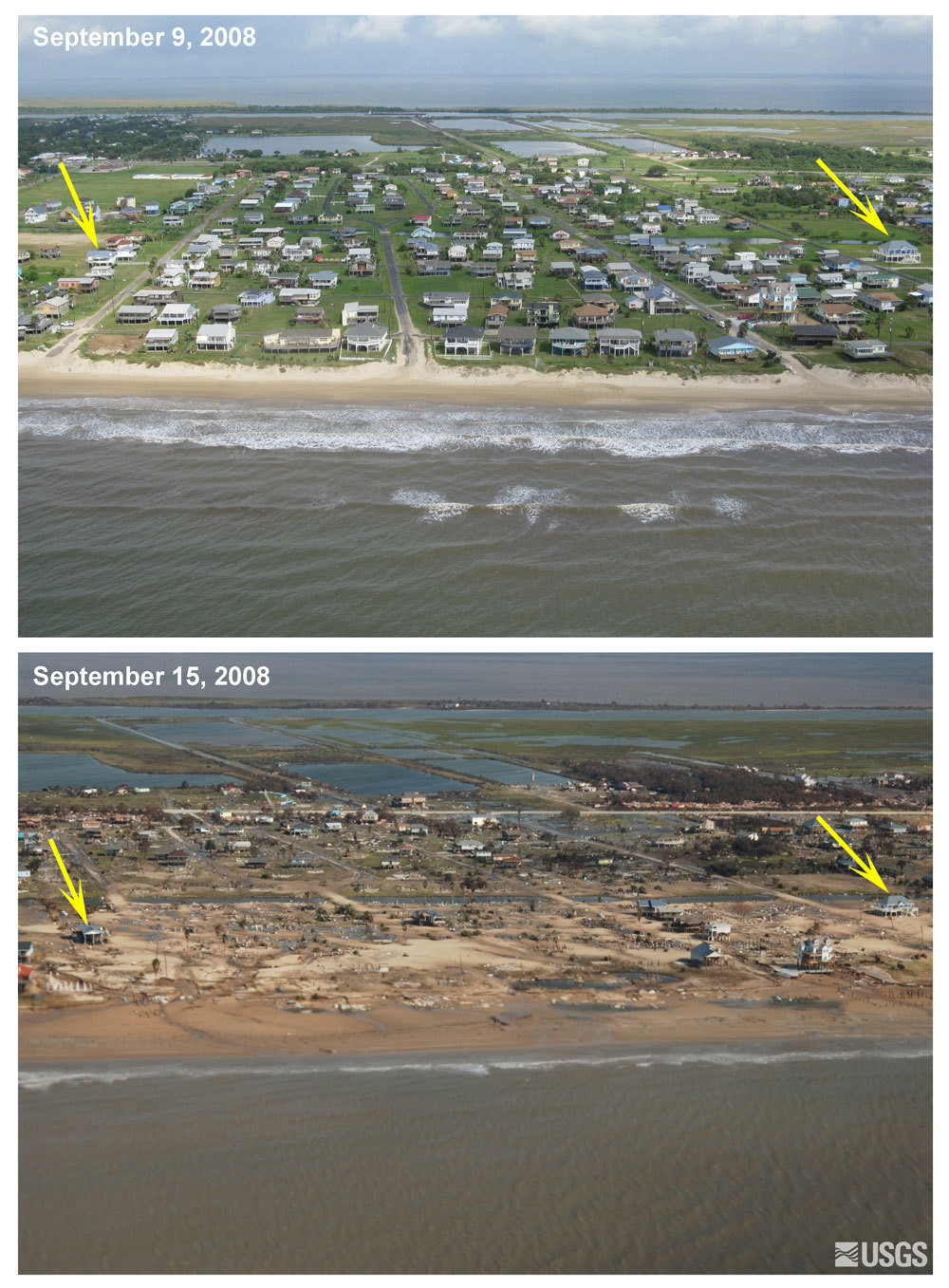
What high school me did not understand was that the category is not the whole story. You see, Ike was massive, and because Ike was massive it had built up a huge storm surge as it moved across the Gulf of Mexico. When it did make landfall in Galveston, Texas it wiped out the nearby low-lying areas around it.
Two years later, that category system was renamed the Saffir-Simpson Hurricane Wind Scale, because what people realized was that wind speed is not the only thing that determines how destructive a hurricane ultimately is. Take advice from someone who saw this same scenario play out ten years ago:
Do not underestimate a storm just because its category goes down. Look at all the risks, not just wind speed. Surge and rainfall are more often than not the most destructive and costly parts of the storm.
Reminder: Hurricane Ike FLATTENED parts of Bolivar Peninsula and the stories coming out of Galveston Island were like nightmares.
As far inland as Northwest Houston, my family and I lost power for 8 days. The “dirty side” (technical term meaning the rainiest side of the cyclone) blew threw Houston and downed trees, ripped siding off of houses, and moved lawn chairs across neighborhoods.
 Penhales